Keywords

JINHUA provides customized automatic hardfacing machines for agricultural wear parts exposed to soil abrasion, crop residue, repeated impact and metal-to-metal contact.
The system coordinates torch movement, wire feeding, workpiece positioning and welding parameters to deposit wear-resistant material on selected working surfaces. It can be configured for new-part manufacturing, worn-part rebuilding or localized reinforcement.
Applicable components include plowshares, cultivator sweeps, tiller blades, subsoiler points, auger flights, feed rollers, chopper parts, shafts and other agricultural machinery components.
JINHUA has produced hardfacing consumables and wear-resistant welding equipment since 1996. Its products are used for wear problems involving abrasion, impact, friction, erosion and cavitation in industries that include farming and agriculture.
View Hardfacing MachinesRequest a Custom Machine Proposal
Automatic hardfacing of flat, curved and rotational parts;
Linear, circumferential, helical and oscillating welding;
Localized reinforcement of selected wear zones;
Single-layer or multi-layer deposition;
Programmable torch travel and workpiece positioning;
Adjustable welding current, voltage and wire-feed speed;
Replaceable fixtures for different agricultural components;
Recipe storage for repeated part specifications;
Optional single- or multi-torch configuration;
Integration with flux-cored hardfacing wire;
New-part production and worn-part rebuilding.
<a href="/contact-us.html" style="display:inline-block;padding:12px 24px;background:#b52722;color:#ffffff;text-decoration:none;border-radius:4px;font-weight:600;">Discuss Your Agricultural Hardfacing Project</a>
Agricultural machinery contains many components with different shapes and wear patterns. The machine configuration should therefore be selected according to the actual workpiece rather than by equipment name alone.
| Agricultural Component | Main Wear Condition | Typical Hardfacing Requirement |
|---|---|---|
| Plowshare | Soil abrasion and occasional stone impact | Edge and lower-surface reinforcement |
| Cultivator sweep | Continuous soil abrasion | Hardfacing along cutting and contact areas |
| Subsoiler point | Severe gouging and impact | Tough build-up layer plus wear-resistant surface |
| Tiller blade | Soil abrasion and repeated impact | Controlled edge hardfacing with limited heat input |
| Ridger or furrower blade | Sliding soil abrasion | Linear or patterned overlay |
| Disc component | Soil abrasion and edge wear | Localized deposition subject to material review |
| Auger flight | Sliding abrasion from grain, feed or soil | Helical or sectional hardfacing |
| Feed roller | Crop abrasion and gripping-surface wear | Circumferential or patterned welding |
| Forage harvester component | Crop flow, dust and impact | Localized edge or surface reinforcement |
| Chopper blade or hammer | Impact and abrasive crop material | Application-specific hardfacing alloy |
| Shaft and pin | Metal-to-metal wear | Circumferential rebuilding and finish machining |
| Mixer screw | Feed abrasion and corrosion | Edge and flight-surface reinforcement |
| Bucket or loader attachment | Soil abrasion and impact | Linear, grid or selected-zone overlay |
Agricultural hardfacing consumables are commonly used on plows, cultivators, tillers, harvester blades and other farm equipment components.
A plowshare, an auger flight and a feed roller cannot normally use the same fixture and motion system. The machine should be configured around the part geometry and required weld path.
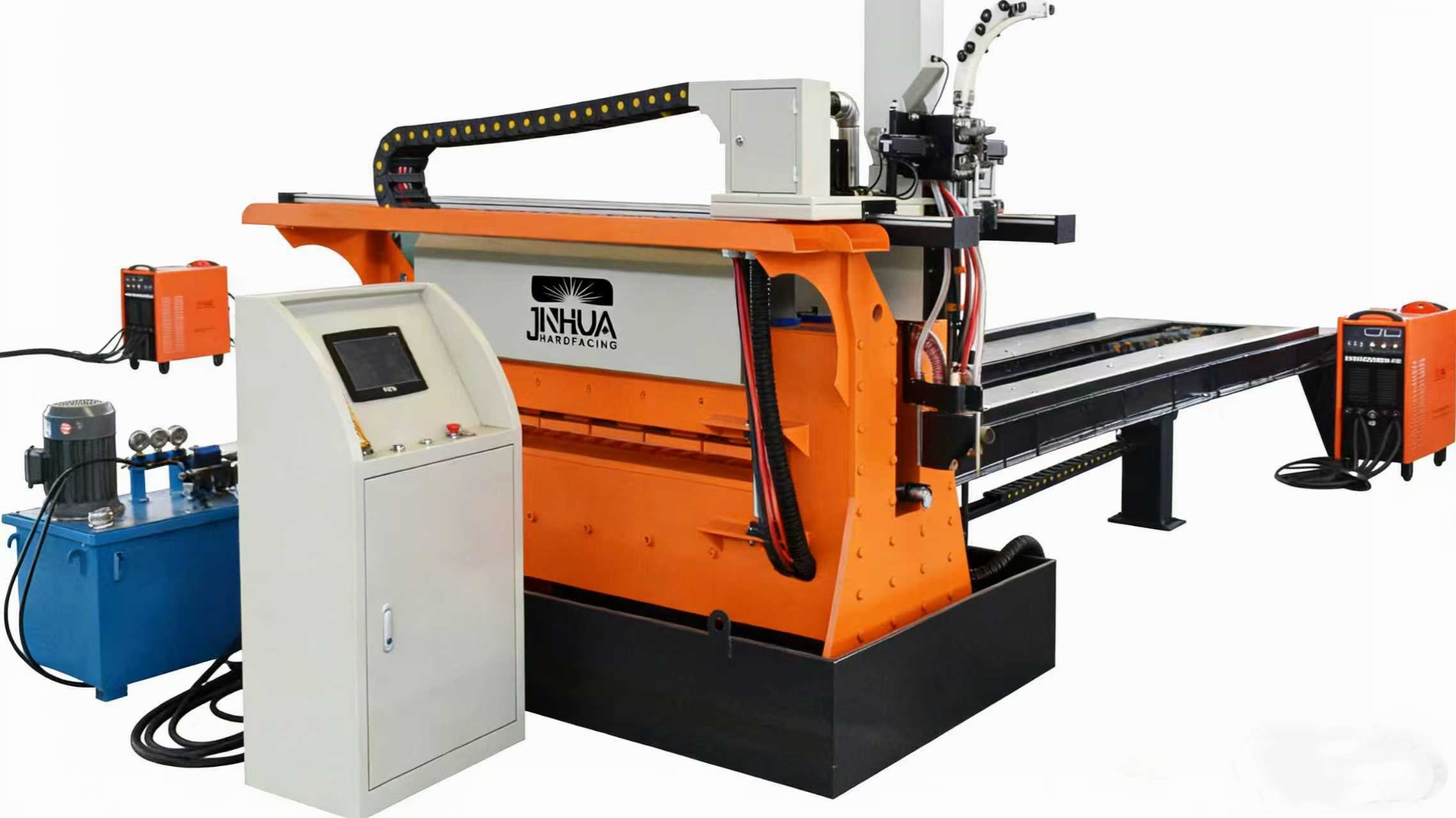
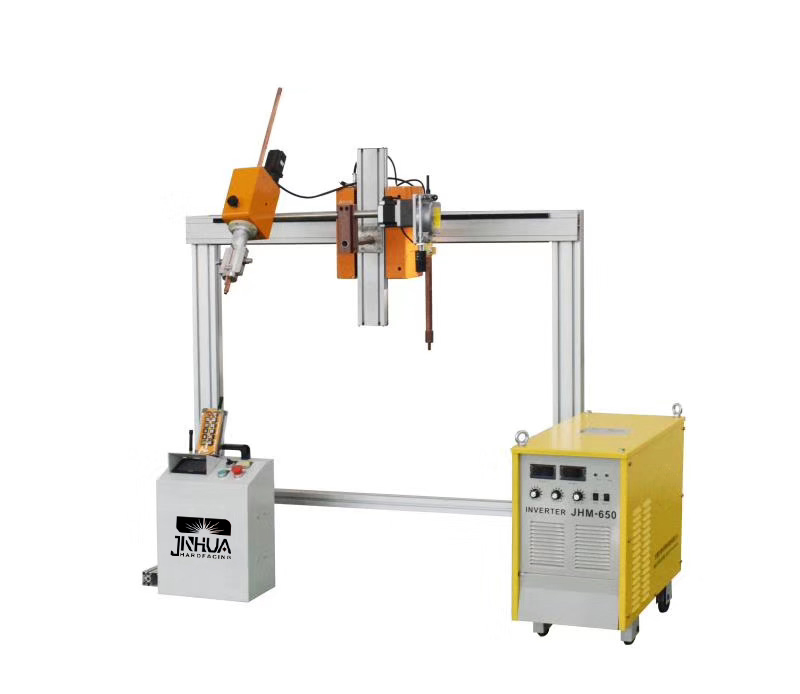
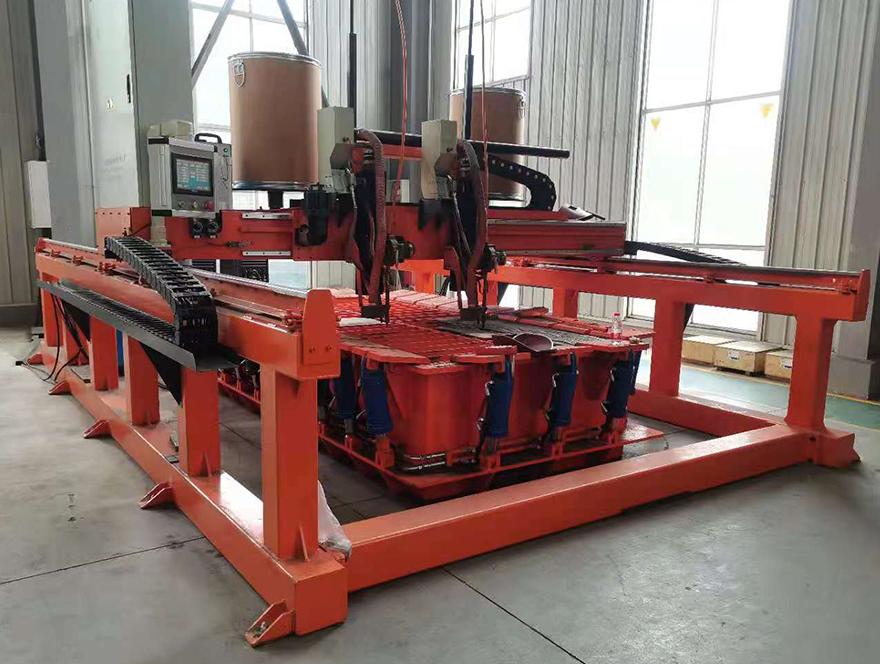
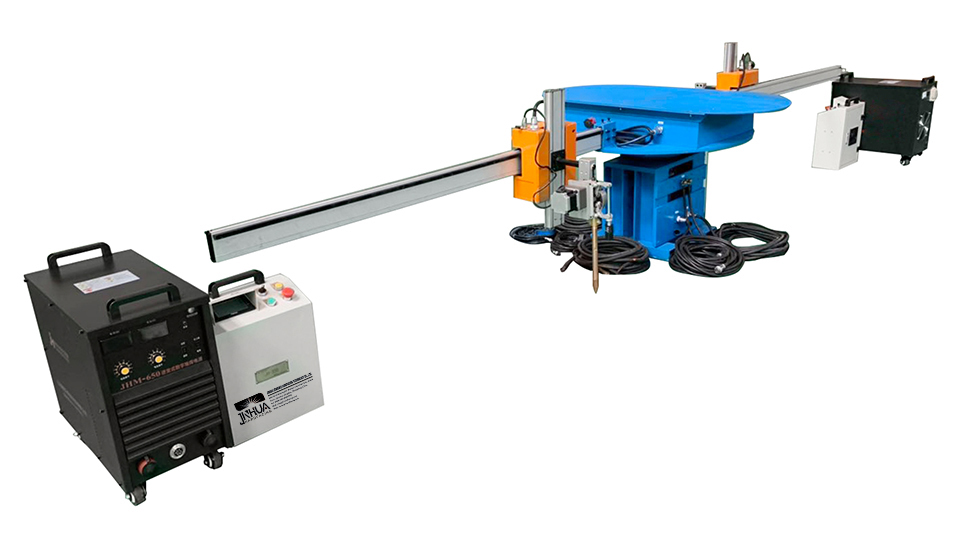
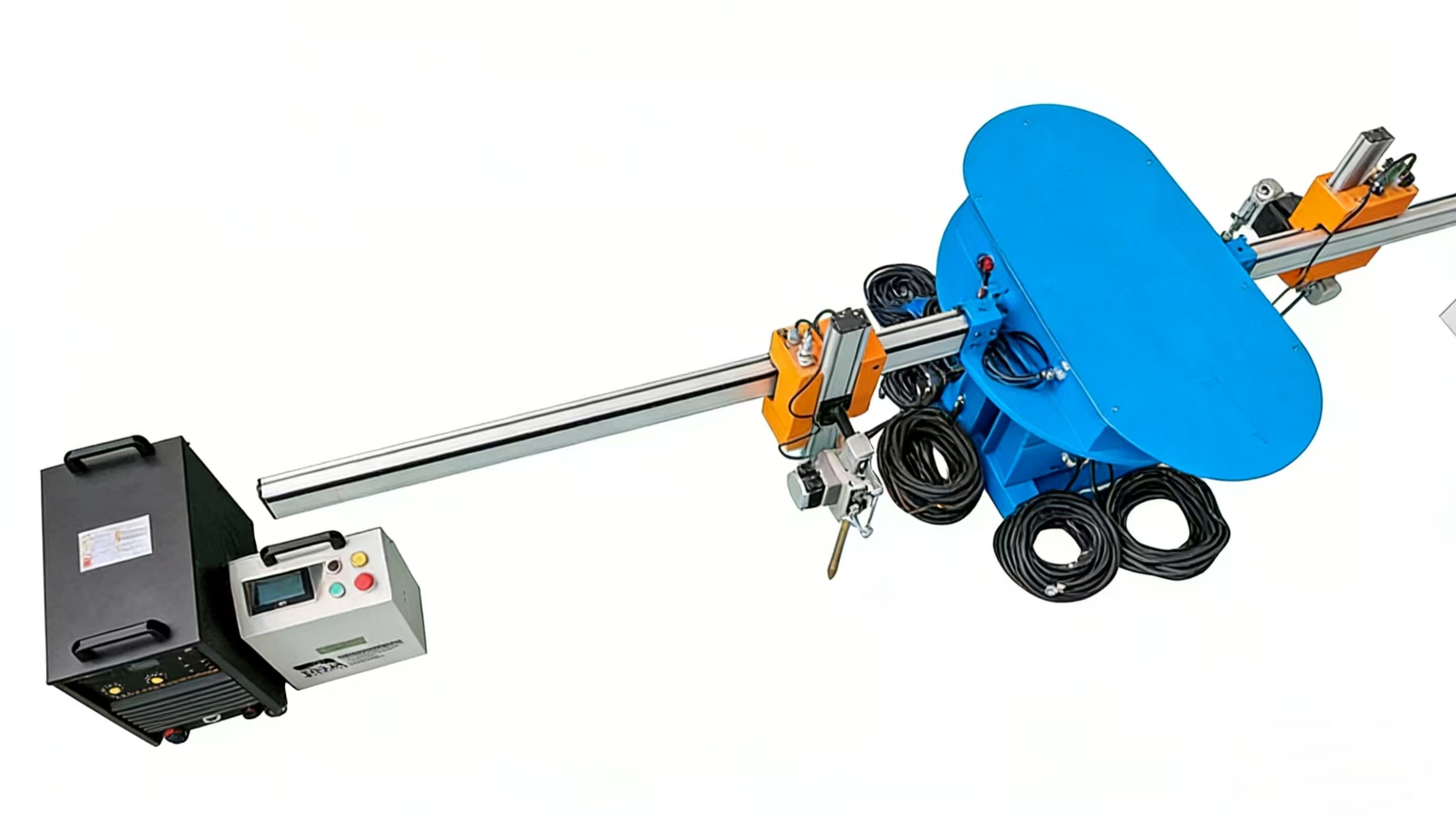
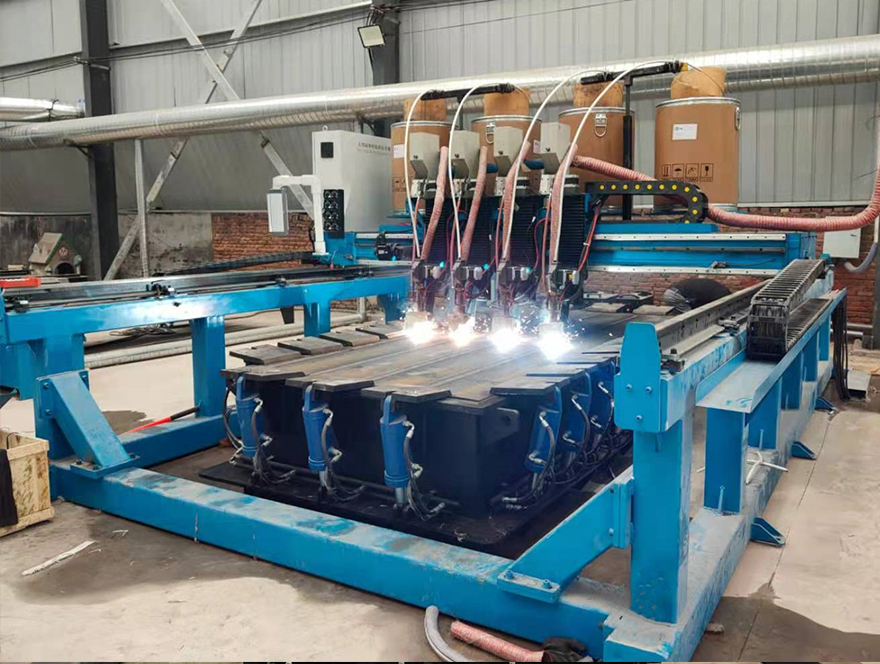
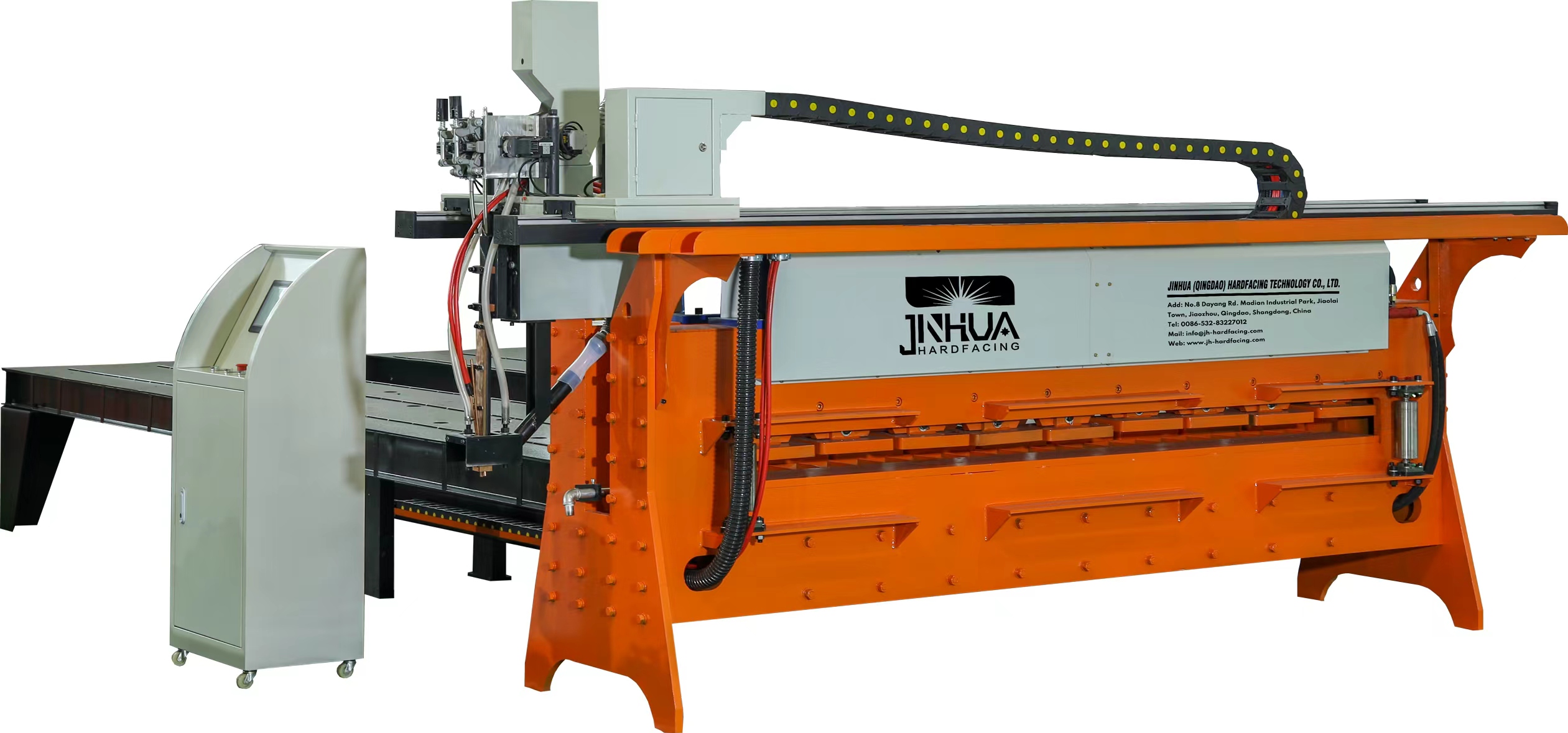
A gantry, linear carriage or programmable welding arm can be used for:
Plowshares;
Cultivator sweeps;
Tiller blades;
Scraper blades;
Chopper plates;
Flat wear liners.
The fixture holds the part in a repeatable position while the welding torch follows the programmed wear area.
Available welding patterns may include:
Straight lines;
Parallel beads;
Crosshatch patterns;
Edge deposits;
Local patches;
Oscillating wide beads.
This configuration is suitable for batch production of components with similar shapes.
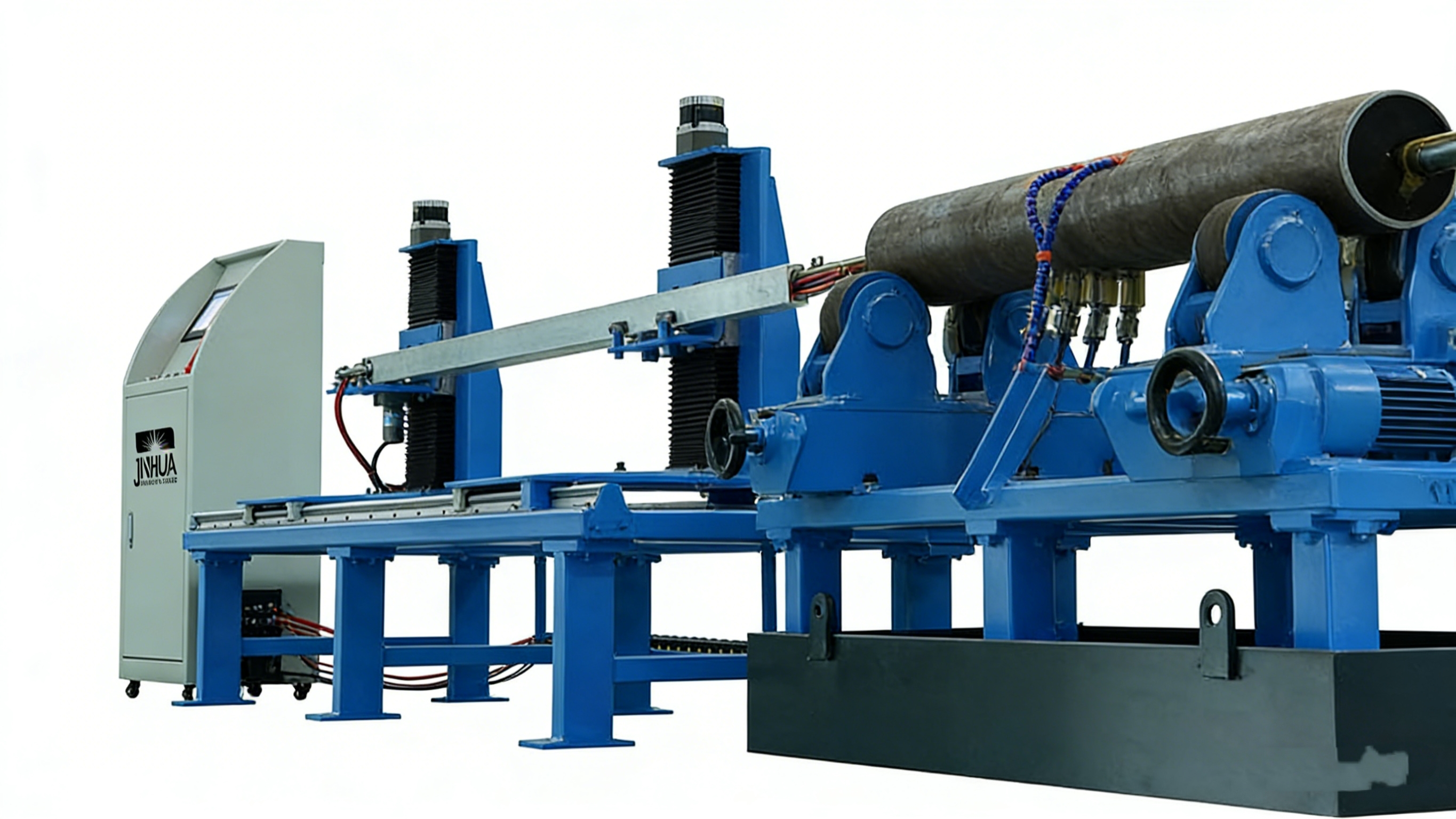
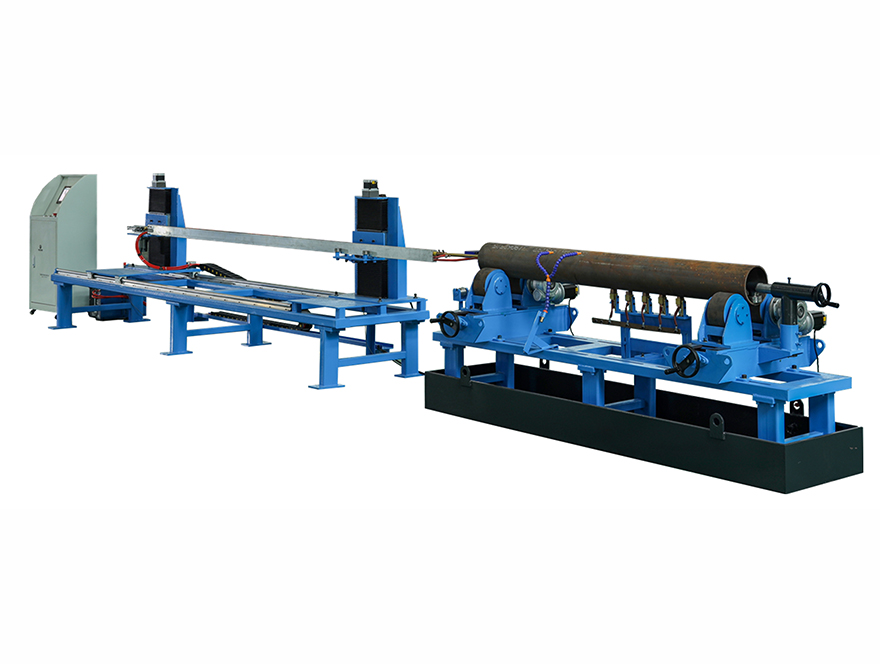
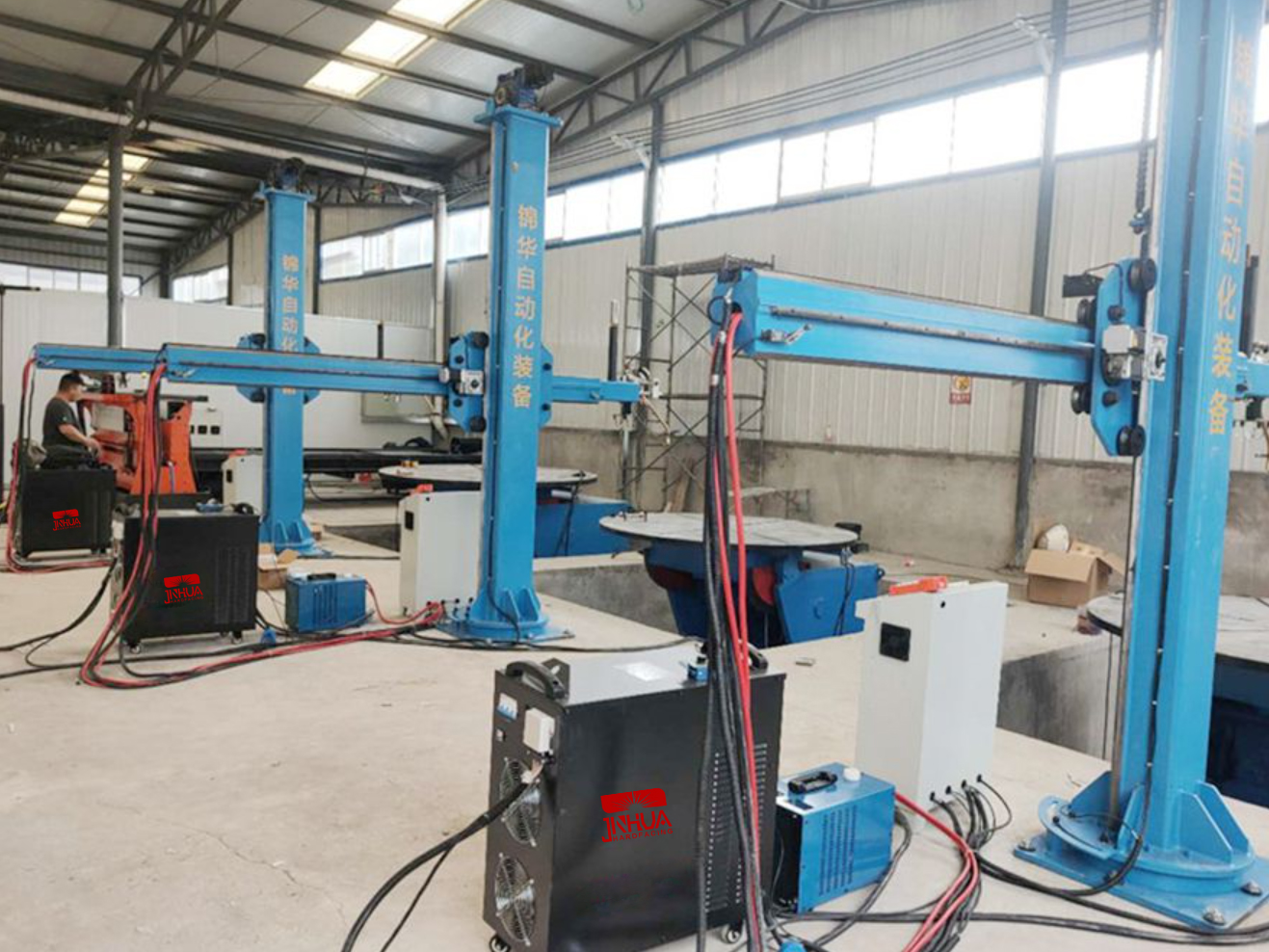
A powered positioner, chuck or turning system can be used for:
Feed rollers;
Shafts;
Pins;
Bushings;
Cylindrical crushing or conveying parts.
The workpiece rotates while the torch remains fixed or moves along the axis.
This allows:
Circumferential welding;
Helical surfacing;
Local repair bands;
Full-length overlay;
Patterned gripping surfaces.
Augers and mixer screws require coordinated rotation and longitudinal torch travel.
The system can be configured to deposit wear material on:
Flight edges;
Leading faces;
Outer diameter;
Selected high-wear sections;
Repaired flight surfaces.
The welding path must follow the pitch and diameter of the flight. Long augers may require adjustable support rests to control deflection during rotation.
Components with complex curves, changing angles or several separate wear zones may require:
Multi-axis motion;
Robotic welding;
A rotating and tilting positioner;
Drawing-based offline programming;
Custom locating fixtures.
A flexible configuration is useful for agricultural machinery manufacturers or repair workshops processing several component families.
Plowshares, cultivator sweeps, tiller blades and subsoiler points experience direct contact with soil, sand, gravel and stones.
The most important wear areas are usually:
Cutting edge;
Leading face;
Lower surface;
Point or tip;
Heel;
Transition between the edge and body.
The weld should be placed according to the direction of soil flow.
Possible arrangements include:
Beads parallel to material flow;
Beads across material flow;
Edge build-up;
Dot or grid patterns;
Localized reinforcement.
The best pattern depends on whether the priority is:
Maintaining a sharp edge;
Reducing soil friction;
Protecting the base material;
Preserving component shape;
Increasing total wear allowance.
Many agricultural blades are relatively thin or heat treated. Excessive welding heat may cause:
Distortion;
Loss of base-metal properties;
Cracking;
Edge deformation;
Difficulty during final assembly.
The machine should therefore control travel speed, welding sequence, interpass temperature and cooling time.
The suitability of each component for hardfacing must be reviewed before production. Not every thin, hardened or safety-critical agricultural part should be welded without confirming its material and heat-treatment condition.
Auger flights and feed-mixer screws experience sliding abrasion along their leading edges and working surfaces.
Hardfacing can be applied to:
Outer flight edge;
Leading side of the flight;
Root transition;
Discharge section;
Local high-wear zones.
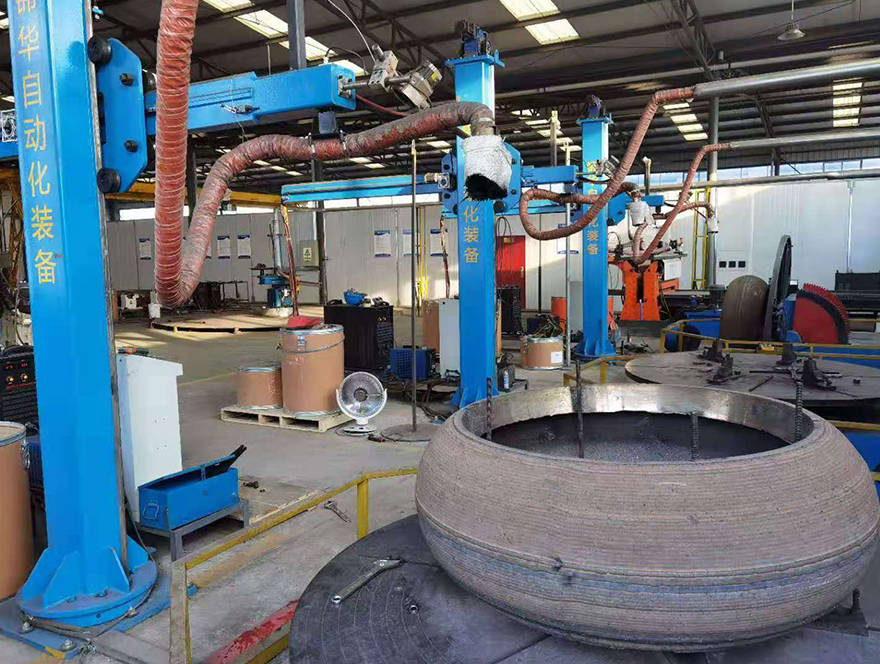
A suitable auger hardfacing system may include:
Powered headstock;
Tailstock or end support;
Intermediate steady rests;
Adjustable torch angle;
Synchronized rotation and travel;
Programmable start and stop positions;
Automatic wire feeding;
Multi-pass control.
The fixture must allow the torch to maintain a consistent distance and angle as it follows the helical flight.
Post-weld dimensional checks may be required to confirm the flight diameter, pitch and balance.
Feed rollers used in forage harvesters, balers and processing equipment may lose their gripping profile through repeated crop contact and contamination.
The machine can deposit:
Circumferential beads;
Helical ribs;
Longitudinal gripping lines;
Diamond or cross patterns;
Localized rebuild layers.
JINHUA’s existing hardfacing equipment supports circular, linear, oscillating and patterned welding movements, providing a technical basis for customized roller and agricultural-part systems.
The selected pattern should match the roller function. A wear-resistant smooth overlay is different from a deposit designed to restore crop-gripping geometry.
| Welding Path | Suitable Agricultural Components |
| Linear welding | Plowshares, blades, sweeps and flat wear areas |
| Oscillation welding | Wide edges and larger surface coverage |
| Circumferential welding | Shafts, pins, rollers and bushings |
| Helical welding | Augers, screws, rollers and cylindrical parts |
| Grid or crosshatch welding | Buckets, plates and selected soil-engaging tools |
| Point or intermittent welding | Localized wear zones and controlled heat input |
| Multi-layer welding | Rebuilding heavily worn components |
| Programmed contour welding | Irregular blades and drawing-based parts |
The machine can be designed around different processes according to the component and hardfacing material.
| Welding Process | Typical Use |
| FCAW | General automated hardfacing, flexible alloy selection and high deposition |
| GMAW | Controlled automated surfacing with external shielding gas |
| Self-shielded FCAW | Workshop or field-oriented repair without separate shielding gas |
| SAW | Larger regular components requiring high deposition rates |
| GTAW | Controlled low-dilution cladding for selected precision parts |
| Multi-pass overlay | Restoring dimensions or building a thicker wear layer |
Hardfacing filler metals are available for FCAW, GMAW, GTAW, SMAW and SAW processes, but the selected process must match the workpiece size, alloy and required deposition rate.
The following table describes the available design direction. Numeric parameters should be finalized after the workpiece drawings are reviewed.
| Configuration Item | Available Design Direction |
| Applicable parts | Blades, plowshares, sweeps, augers, rollers, shafts and custom wear parts |
| Workpiece shape | Flat, curved, cylindrical, helical or irregular |
| Welding position | Flat, inclined, external diameter or localized area |
| Welding path | Linear, oscillating, circular, helical, grid or programmed contour |
| Workpiece fixture | Manual clamp, pneumatic fixture, chuck, positioner or custom tooling |
| Workpiece rotation | Variable-speed motor or servo-controlled |
| Torch movement | Single-axis, multi-axis or robotic |
| Welding process | FCAW, GMAW, SAW or GTAW according to application |
| Torch quantity | Single, double or customized multi-torch |
| Wire feeding | Automatic single- or multi-wire feeder |
| Control system | PLC, CNC or robotic controller |
| Parameter storage | Optional recipe storage |
| Cooling | Torch cooling and optional workpiece cooling |
| Fume extraction | Optional collection interface or enclosed extraction |
| Loading | Manual, crane-assisted, conveyor or robotic |
| Safety | Emergency stop, guards, travel limits and interlocks |
| Production mode | New parts, rebuilding or mixed production |
JINHUA’s hardfacing equipment range supports single-, dual- and multiple-torch welding, together with pipe, roller, plate and sheet overlay systems.
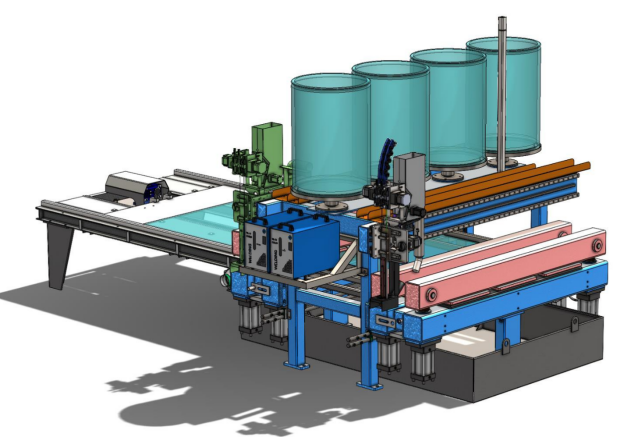
A customized agricultural machinery hardfacing system may include:
Welded machine frame;
Adjustable worktable;
Workpiece locating fixture;
Powered rotary positioner;
Headstock and tailstock;
Linear torch carriage;
Multi-axis welding arm;
Automatic wire feeder;
Welding power source;
Water-cooled welding torch;
PLC or CNC control cabinet;
Touchscreen operating panel;
Fume extraction system;
Safety enclosure;
Part-loading assistance;
Optional robotic handling.
The exact structure depends on whether the machine mainly processes flat blades, rotational parts, augers or several types of agricultural components.
Available control functions may include:
Automatic arc starting and stopping;
Programmable start and end positions;
Adjustable torch travel;
Variable workpiece rotation;
Synchronized helical welding;
Oscillation amplitude and speed control;
Welding-current and voltage monitoring;
Wire-feed speed control;
Multi-layer sequence programming;
Bead-overlap control;
Workpiece recipe storage;
Wire-break alarm;
Breakpoint recovery;
Production counting;
Manual setup and automatic operating modes.
Existing JINHUA hardfacing machines provide functions such as real-time position display, wire-break alarms, breakpoint detection and remote operation.
Replaceable fixtures and programmable motion allow one equipment platform to process several part models within an agreed size and geometry range.
Automatic positioning helps maintain consistent:
Weld location;
Bead spacing;
Overlay width;
Deposit thickness;
Start and stop points.
This is particularly useful for repeated production of plowshares, sweeps and blades.
The operator does not need to control every torch movement manually. Once the fixture and program are confirmed, the machine can repeat the same welding path across a production batch.
Travel speed, welding sequence and pause time can be programmed to reduce overheating of thinner agricultural parts.
The system can be used to:
Add wear protection to new parts;
Rebuild worn edges;
Restore selected dimensions;
Reinforce high-wear areas;
Process repeated replacement components.
JINHUA supplies both hardfacing equipment and flux-cored hardfacing wires. Its wire range includes products intended for agricultural soil-engaging components and machinery exposed to abrasion and impact.
The hardest available alloy is not automatically the most suitable choice.
A higher-hardness abrasion-resistant deposit may be suitable for:
Cultivator sweeps;
Plow surfaces;
Auger flights;
Mixer screws.
A tougher alloy should be considered for:
Subsoiler points;
Tillage components working in rocky soil;
Loader attachments;
Chopper or hammer components.
A different deposit may be required for:
Shafts;
Pins;
Rollers;
Bearing areas;
Hinges.
Metal-to-ground and metal-to-metal wear require different hardfacing approaches.
Feed, fertilizer, moisture and chemical exposure may require corrosion resistance in addition to hardness.
Provide the actual operating environment before selecting the welding wire.
Review the used part and mark:
Leading edge;
Soil-contact surface;
Impact point;
Metal-to-metal contact;
Localized thinning;
Previous repair zones.
Determine:
Steel grade;
Heat-treatment condition;
Carbon equivalent;
Existing coating;
Previous hardfacing alloy;
Weldability.
Remove rust, oil, paint, soil and damaged metal.
A heavily worn component may require build-up welding before applying the final wear-resistant layer.
Place the workpiece in the dedicated fixture and verify:
Orientation;
Welding side;
Torch clearance;
Part position;
Clamping stability.
Set:
Welding path;
Current and voltage;
Wire-feed speed;
Travel speed;
Oscillation;
Rotation speed;
Bead spacing;
Number of layers;
Cooling intervals.
The machine follows the programmed route while the operator monitors arc stability, wire supply and part temperature.
Check:
Weld coverage;
Deposit position;
Surface condition;
Cracks;
Distortion;
Overlay thickness;
Part dimensions;
Fit with the agricultural assembly.
A production and inspection plan can include:
Base-material confirmation;
Hardfacing-wire batch identification;
Fixture-position verification;
Welding-parameter recording;
Deposit hardness testing;
Overlay thickness measurement;
Visual inspection;
Crack and fusion inspection;
Dimensional inspection;
Trial fitting;
Sample wear testing where required.
The acceptable crack pattern depends on the selected hardfacing alloy. Some high-carbide deposits naturally form stress-relief cracks, while cracking may be unacceptable in tougher rebuilding layers.
To prepare a quotation for a Hardfacing Machine for Agricultural Machinery, provide:
Agricultural component name;
Workpiece drawing;
Clear photographs;
Minimum and maximum dimensions;
Workpiece weight;
Base material;
Heat-treatment condition;
Current wear pattern;
Required hardfacing area;
Preferred welding pattern;
Hardfacing wire or target hardness;
Required deposit thickness;
Number of layers;
Expected production quantity;
Production cycle target;
Manual or automatic loading;
Available welding power source;
Factory voltage and frequency;
Required automation level;
Workshop layout;
Fume extraction requirements.
When several components will use the same machine, provide drawings and annual production volumes for each part family.
JINHUA combines hardfacing-machine manufacturing with the production of flux-cored hardfacing wire, wear plates and customized wear components.
Project support can include:
Wear-condition review;
Workpiece classification;
Fixture design;
Welding-process selection;
Consumable matching;
Machine configuration;
Trial welding;
Factory testing;
Operator training;
Commissioning support;
Spare-parts guidance.
The machine specification should be confirmed through actual workpiece review and welding trials rather than copied from a general-purpose hardfacing machine.
Agricultural wear parts differ in material, thickness, geometry and wear mechanism. A machine for plowshares may require a flat positioning fixture, while an auger or feed roller requires synchronized rotation and axial torch travel.
Send your workpiece drawings, dimensions, materials, wear areas, production quantity and required welding process. JINHUA will configure a suitable Hardfacing Machine for Agricultural Machinery around your component range.
It can be configured for plowshares, cultivator sweeps, tiller blades, subsoiler points, auger flights, feed rollers, shafts and other agricultural wear parts.
Yes, within the agreed size and motion range. Different fixtures and welding programs may be required for each component family.
Yes. A suitable system synchronizes workpiece rotation with longitudinal torch travel so that the welding torch follows the auger flight.
Potentially, but the blade material, heat treatment and thickness must be reviewed. Controlled heat input and welding sequence are important to reduce distortion.
It can be used for both new-part wear protection and rebuilding of worn components.
FCAW is commonly considered for automatic agricultural hardfacing because of its alloy flexibility and deposition rate. GMAW, SAW or GTAW may also be selected according to the workpiece and deposit requirement.
Yes. Depending on the control system, the machine can produce linear, oscillating, circumferential, helical, grid or drawing-based paths.
No. Soil abrasion, impact, metal-to-metal wear and corrosion require different deposit properties.
Recipe storage can be included for repeated workpiece models, fixture positions and welding parameters.
Provide drawings, dimensions, weight, base material, wear area, target deposit, production volume, welding process and required automation level.
Inquiry
Related
Hardfacing Machine for RollersWear Protection Solutions for Mining, Cement, Power, Steel, Sugar & Oil & GasHardfacing Machine for Cutting ToolsHardfacing Machine for Hydraulic CylindersHardfacing Machine for BladesHardfacing Process & ApplicationsHardfacing Machine for MoldsHardfacing Machine for Pump ShaftsCeShiHardfacing Machine for Boiler Tubes2025 Hardfacing Industry Trends AnalysisHardfacing Machine for GearsHardfacing Machine for Cylinder RodsHardfacing Machine for Agricultural MachineryHardfacing Techniques & FeaturesMaterials & Consumables for HardfacingHardfacing Applications in Various IndustriesHardfacing Machine for ValvesHardfacing Machine for DiesTypes of Hardfacing MachinesGeneral Hardfacing MachineCopyright © Jinhua (Qingdao) Hardfacing Technology Co., Ltd. All Rights Reserved |
Sitemap
| Technical Support: