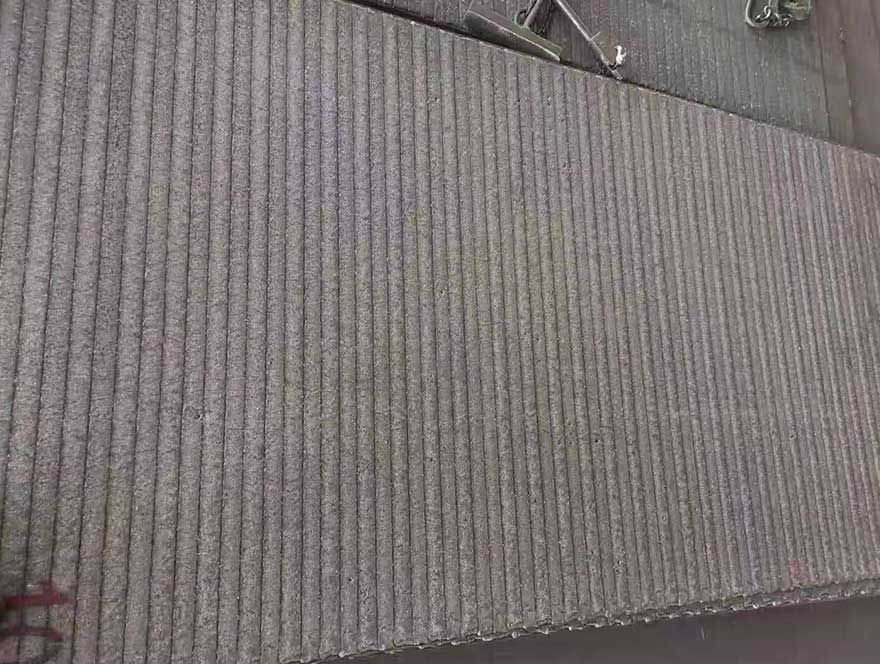
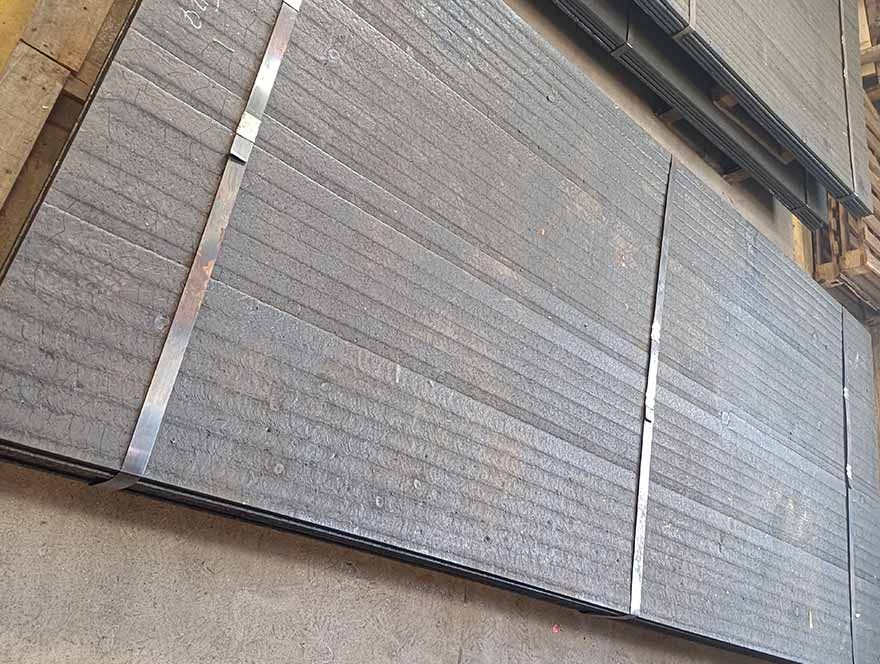
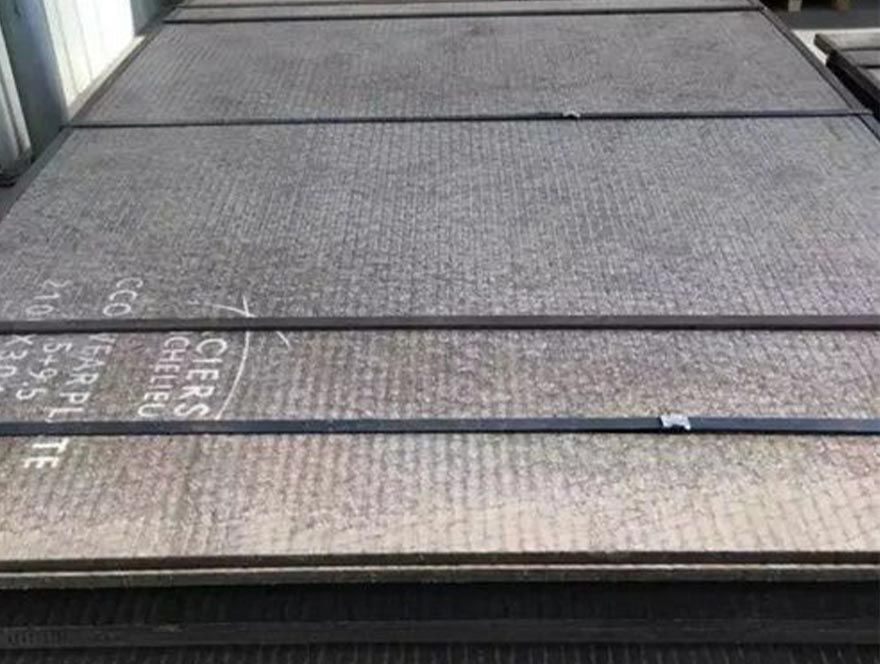
Clad Welding Wear Resistance Plates
If you are looking for a wear plate supplier to supply you with wear plates and wear steel components, then you have come to the right place. In addition to the best solutions and good service, we can also offer competitive prices for wear plates and wear steel parts.
Thickness: 3+3, 4+4, 5+5, 6+6, 8+8, 10+10, 12+12
Size: 1400mm*2000mm, 1500mm*3000mm, 2000mm*3000mm and Customized Size
VIDEO
SPECIFICATION
Get the ultimate protection for your equipment with our clad welding wear resistance plates!
| Chemical Composition of Deposited Metal (Wt%) | ||||||
| Thickness | C | Si | Mn | P | S | Cr |
| 3+3 | 3.5-4.5 | 0.4-1.2 | 0.4-1.0 | - | - | 19-22 |
| 4+4 | 3.5-4.5 | 0.4-1.2 | 0.4-1.0 | - | - | 19-23 |
| 5+5 | 3.5-4.5 | 0.4-1.2 | 0.4-1.0 | - | - | 20-23 |
| 6+6 | 3.5-4.5 | 0.4-1.2 | 0.4-1.0 | - | - | 24-38 |
| 8+8 | 3.5-4.5 | 0.5-1.2 | 0.5-1.0 | - | - | 27-31 |
JINHUA manufactures hardfacing wear plates for equipment exposed to continuous abrasion, sliding wear and material erosion. Rather than selecting a wear plate by hardness alone, we recommend matching the overlay and total plate thickness to the actual operating condition.
Common applications include chutes, hoppers, crusher liners, bucket liners, transfer points, pipe sections and other surfaces exposed to ore, clinker, coal, sand and similar abrasive materials.
For a new project, send us the material handled, equipment position, impact condition, operating temperature and required service life. We can then review the required plate construction before quotation.
Wear plate thickness is normally specified as the base plate thickness plus the hardfacing overlay thickness.
For example:
3+3
A thinner backing plate with a thinner overlay. It is generally considered where space and overall component weight are limited and the wear allowance required is relatively small.
6+6
Provides a greater wear allowance and is suitable for many liners and wear surfaces exposed to continuous abrasive material flow.
8+8 / 10+10 / 12+12
Used where a thicker wear layer or heavier plate construction is required for severe service.
The thickest plate is not automatically the best choice.
Before production, the selection should consider:
Wear rate
Impact level
Material particle size
Material drop height
Operating temperature
Existing liner thickness
Equipment clearance
Expected maintenance interval
If an existing liner is being replaced, send the current plate specification and working-life record. This gives us a more useful starting point than selecting only by total thickness.
These two products are often searched together, but they are not the same material.
Hardfacing Wear Plate
A hard alloy overlay is welded onto a tougher steel backing plate. The overlay provides the main abrasion resistance while the backing plate supports fabrication and installation.
It is commonly considered for severe sliding abrasion and material-handling surfaces where wear occurs mainly at the equipment surface.
Quenched and Tempered Wear-Resistant Steel Plate
AR-type steel such as AR400 or AR500 is wear resistant throughout the plate rather than having a separate welded overlay.
It is commonly selected where wear resistance needs to be combined with higher impact resistance and where conventional steel fabrication methods are important.
For equipment exposed mainly to severe abrasion, a hardfacing wear plate can provide a much harder working surface.
Where heavy impact is the dominant failure mode, the application should be reviewed before choosing an overlay plate.
Send us the wear location and operating condition if you are deciding between an overlay wear plate and a conventional abrasion-resistant steel plate.
Flux‑Cored Arc Welding (FCAW)
FCAW is the predominant method for depositing wear-resistant overlays on wear plates. This technique enables high deposition rates, which helps in building a thick and consistent hardfacing layer quickly.
Submerged‑Arc Welding (SAW)
For large plates or very thick overlay layers, SAW is often employed due to its deep penetration and high deposition efficiency. This makes it cost-effective for heavy-duty and large-scale wear-resistant plate production.
Multi‑Pass Overlay Welding
Multiple welding passes are typically used to achieve the required overlay thickness. Controlling the heat input and interpass temperature is essential to ensure a homogeneous hardfacing layer and to minimize dilution or cracking.
Stress‑Relief / Cross‑Check Cracking
As the overlay cools, a network of micro‑cracks (also known as cross‑check cracks) often forms. Contrary to being defects, these cracks help relieve internal stresses and contribute to better performance under impact or thermal cycling.
Cutting & Fabrication
After the hardfacing layer is welded, the wear plates can be cut, formed, or fabricated using common industrial methods such as plasma cutting, water‑jet cutting, or laser cutting. This customization allows wear plates to fit specific machinery geometries.
Chromium‑Carbide (Cr‑C) Alloys
Chromium‑carbide overlay is the most common material for wear plates. The Cr–C alloy forms carbide phases (such as Cr₇C₃) that provide very high hardness and excellent resistance to abrasive wear.
High‑Chromium / High‑Carbon Alloys
Alloys with elevated chromium and carbon content are used to create very hard microstructures. These materials are suited for environments with severe abrasion.
Complex Carbide Systems
For even more demanding wear applications, overlay alloys may include additional elements (e.g., niobium, vanadium, titanium) to form complex carbides. These carbides enhance resistance to erosion, sliding abrasion, and long-term wear.
Ductile Buffer or Transition Layers
To reduce brittleness and improve the toughness of the overlay, a graded or layered design can be used: a more ductile layer near the steel base plate is followed by a hard, carbide-rich surface layer. This helps balance wear resistance and impact tolerance.
Thermal Stability & High‑Temperature Alloys
For applications that involve elevated temperatures, alloy formulations can be tuned to maintain hardness at high temperatures, ensuring long-term stability of the overlay.
If the wear plate is subject to severe abrasion, then thick chromium‑carbide overlays deposited by FCAW or SAW are highly effective.
For zones with impact + abrasion, using a layered overlay (tough base + hard surface) and controlled crack patterns helps absorb shock while maintaining surface hardness.
In high-temperature environments, selecting alloy systems that retain hardness under thermal load is critical for long-lasting wear protection.
For custom parts and shapes, hardfaced plates can be pre-welded and then cut to specification, giving flexibility in design and installation.
Extended Service Life — Overlay layers with high carbide content significantly slow down wear, greatly extending the lifetime of base components.
Reduced Maintenance Costs — By using wear plates, you avoid frequent part replacement, leading to cost savings over time.
Improved Reliability — Properly designed overlays (with microstructure control and crack-relief) deliver consistent performance even under severe operating conditions.
Customization — Wear plates can be manufactured in various sizes, shapes, and grades to match specific equipment and wear profiles.
Clad welding wear resistance plates are high-performance metal plates designed to withstand extreme wear and tear in industrial and mining applications. These plates are made by welding a layer of wear-resistant material onto a base material, creating a durable and long-lasting product that can withstand harsh operating conditions.
JINHUA tungsten carbide covered wear plate, a unique chromium carbide covered plate, is located on a mild steel base. Its excellent wear resistance and abrasion resistance ensures longer equipment life while reducing maintenance costs.
Produced using a unique and versatile automated batch welding method, tungsten carbide covered wear plates are made from the highest quality raw materials and offer superior wear resistance and high durability compared to mild steel. Our fully automated production methods and quality control procedures ensure that the product has uniform chemical analysis and hardness throughout the composite layer.
The base material used is primarily carbon steel, which allows the final product to be easily welded and formed in complex structures. Other steels can be used as substrates, including stainless steel, AR and other special steels as required by the customer in specific applications.
Plates and fabrications offer excellent wear resistance and can be easily installed on all types of equipment, extending their service life while providing cost-effective protection.JINHUA's design, fabrication and manufacturing expertise ensures an increased return on your wear investment, thus giving you peace of mind.
Wear resistance plates are considered one of the most important things that manufacturing and industrial companies need. If you own one, then you have probably considered using wear plates; but what are they really for?
Many industries need to use wear plates for one or more of the machine parts they own:
Prevent excessive and premature wear
Avoid damage such as scratches, cracks, burrs, etc.
Increase or extend the life expectancy of a part
Chute liners
Bucket liners
Dump truck pallets
Feed plates
Crusher liners
Chute liners
Pipe work
Screen plates
Mobile Equipment
JINHUA can also custom manufacture wear plates to meet your specific requirements. JINHUA will help you select the right and best wear resistant products, using JINHUA developed machine made wear plates and wear resistant steel parts and help you import them from China to your plant.
If you are looking for a wear plate supplier to supply you with wear plates and wear steel components, then you have come to the right place.
Even though wear plates for wear-resistant steel are now very mature, JINHUA can always strive to make wear plates even better.
In addition to the best solutions and good service, we can also offer competitive prices for wear plates and wear steel parts.
1. Plant Introduction
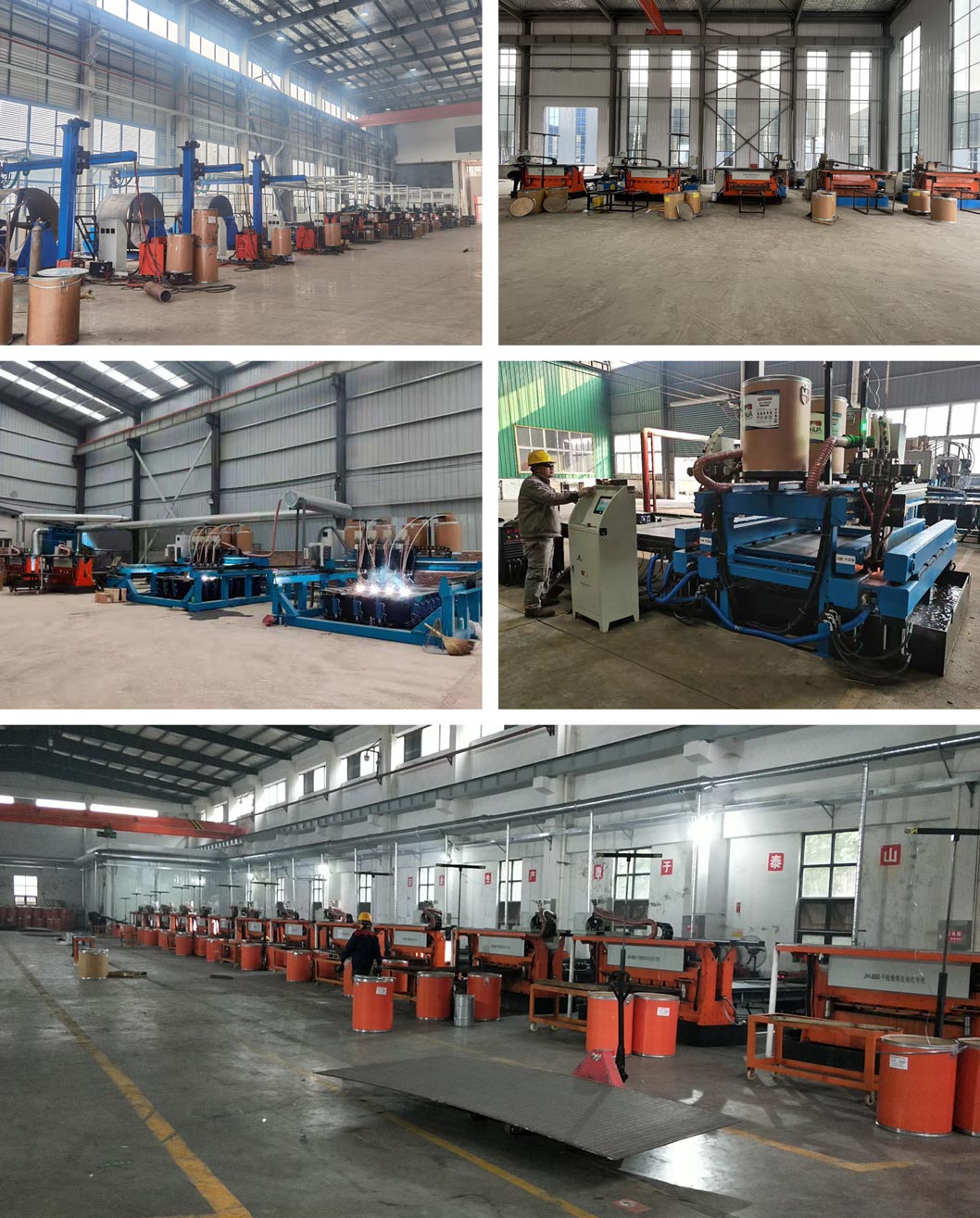
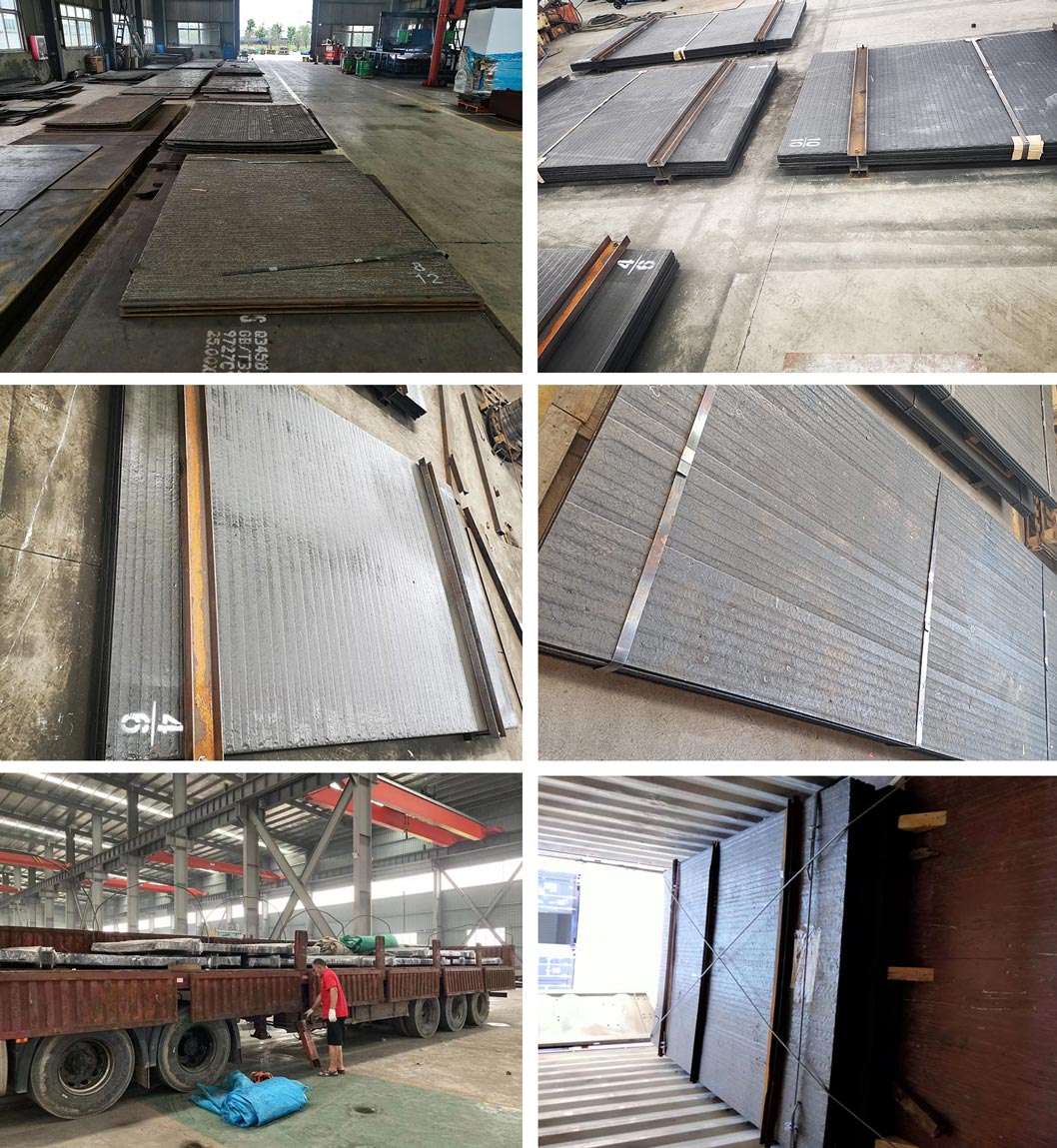
We have equipped with our own developed wear plate hardfacing machine, including single torch, double torch and quadrule torch wear plate hardfacing machine, total 25 uints hardfacing machine.
ADVANTAGE
Superior wear quality (25 times more durable than mild steel, as verified by ASTM G65)
Uniform hardness and chemical composition
Tough austenitic matrix supporting hard carbides
Good heat resistance up to 500°C (932°F) for AB 200 and up to 600°C (1112°F) for AB 400 high temperature
Flat and smooth surface
Good integration with the backing plate, minimal penetration
Mild steel backing plate, easy to weld
Cold forming
Inner roll diameter as small as 250mm
Low dilution of alloy
Multiple sizes and thicknesses
Extremely competitive pricing
PICTURE
TAGS
Copyright © Jinhua (Qingdao) Hardfacing Technology Co., Ltd. All Rights Reserved |
Sitemap
| Technical Support: