News

The use of hardfacing machines is essential in extending the life of agricultural machinery parts. Farmers face challenges with equipment wear and tear. Traditional machinery often struggles under harsh conditions. Hardfacing provides a solution by applying a durable layer on important parts, resulting in increased resistance to wear. This technique is critical for ensuring that equipment operates efficiently, especially during peak seasons. Understanding hardfacing can help in making informed decisions about maintenance and repairs. 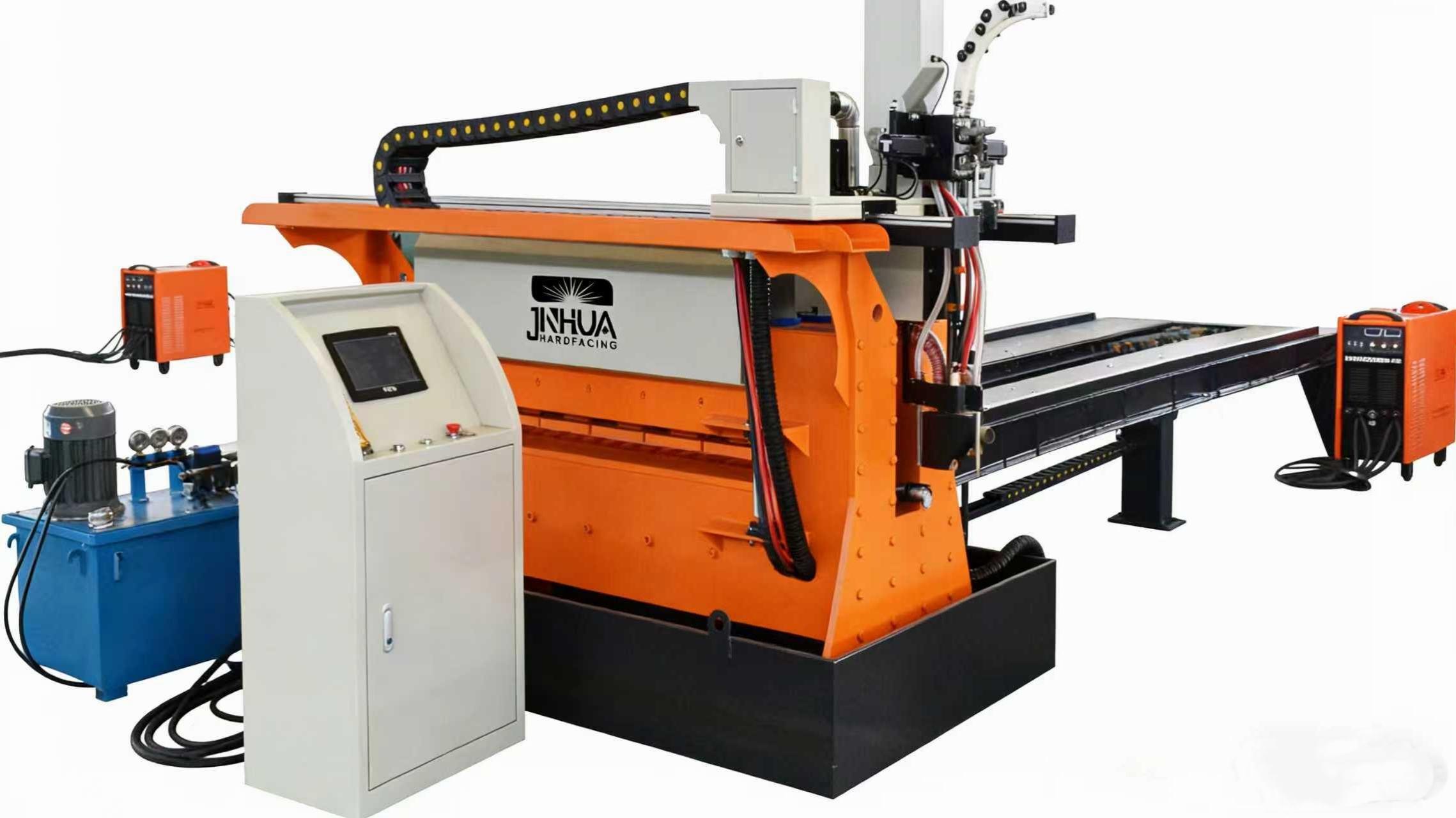
Hardfacing is a protective process that enhances the durability of agricultural machinery parts by applying a wear-resistant layer. This helps reduce maintenance costs and downtime, ensuring smooth operations on farms.
Hardfacing significantly extends the life of agricultural equipment by protecting it from wear and tear.
Implementing hardfacing can lower maintenance costs because it reduces the frequency of repairs and replacements.
With harder surfaces, equipment operates more smoothly, improving overall efficiency in farming practices.
This method involves using tungsten carbide particles, known for their hardness, to enhance wear resistance.
Flux-cored welding allows for a stronger bond during the hardfacing process, effectively applying high-quality coatings.
PTA welding produces very high-quality overlays, making it ideal for critical components in agricultural machinery.
Hardfacing plow shares increases their lifespan, reducing how often they need replacing during the planting season.
Combines and harvesters benefit from hardfacing as it protects high-wear areas, ensuring optimal performance.
Enhancing disk blades with hardfacing extends their effectiveness in cutting soil and planting seeds.
Clean the surface of the machinery part to remove any old material and ensure good adhesion.
Choose an appropriate hardfacing method based on the equipment and the expected wear conditions.
Heat treatment may be applied after hardfacing to optimize the material properties.
Conduct a thorough inspection to ensure that the hardfacing layer is uniformly applied and meets quality standards.
In conclusion, hardfacing applications in agricultural machinery parts provide vital solutions for enhancing wear resistance. By employing hardfacing techniques, farmers can extend the life of their equipment, reduce costs, and improve operational efficiency. Understanding these benefits is essential for anyone involved in agriculture today.
1. What is hardfacing?
Hardfacing is a welding process that applies wear-resistant materials to equipment parts.
2. How does hardfacing benefit agricultural machinery?
It increases durability, reduces maintenance costs, and improves efficiency.
3. What are the common methods of hardfacing?
Common methods include tungsten carbide hardfacing, flux-cored arc welding, and plasma transferred arc welding.
4. Can all agricultural parts be hardfaced?
Most agricultural machinery parts, especially those subject to wear, can be hardfaced.
5. How long does hardfacing last?
The lifespan of hardfacing depends on usage, but it typically significantly extends the life of the part.
Copyright © Jinhua (Qingdao) Hardfacing Technology Co., Ltd. All Rights Reserved |
Sitemap
| Technical Support: